How to Actually Rest (Hint: It's Not Watching Netflix)
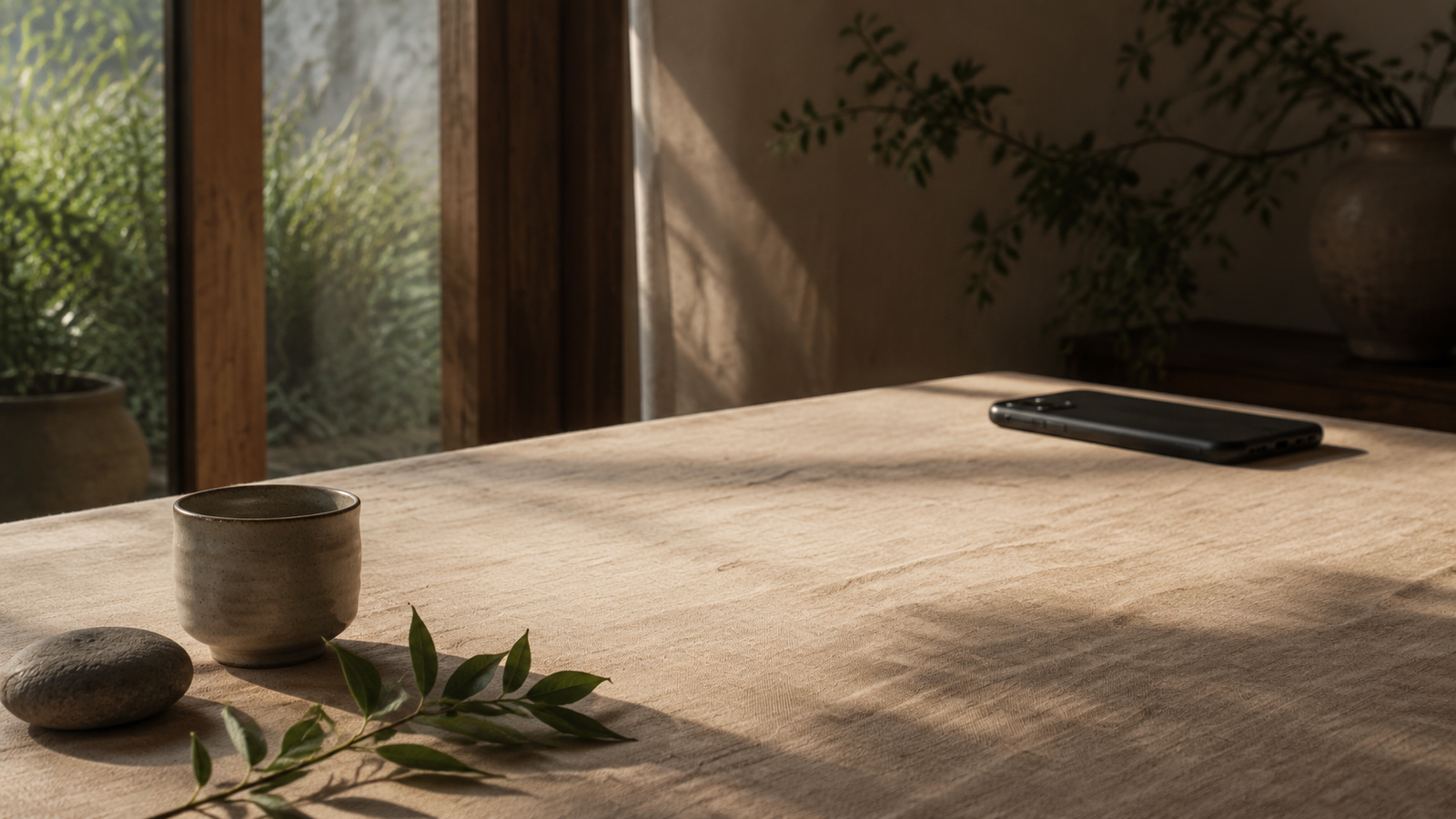
Differentiating between passive distraction and active, restorative rest for cellular recovery.
Much of what we call resting is really a change of activity.
We stop working and begin scrolling. We leave one screen and open another. We stream a series, answer a few messages and keep a low current of information moving through the mind.
There is nothing inherently wrong with this. A familiar film, an absorbing book or a light programme can be comforting and enjoyable.
But enjoyment, distraction and restoration are not always the same thing.
You may have noticed the difference yourself: an hour has passed, but your mind still feels crowded. Your body has been still, yet something inside you has not fully settled.
Restorative rest asks for a different quality of attention.
It is not "active" in the sense of becoming another task to perform correctly. It simply creates fewer demands—less information to process, fewer decisions to make and less pressure to respond.
That may mean sitting quietly for ten minutes, walking without listening to anything, looking out of a window, spending time in nature, breathing slowly and comfortably, or allowing yourself to do nothing long enough for the initial restlessness to pass.
Within Thai Longevity Method, Water offers a language for replenishment.
It invites us to ask:
*Am I receiving anything back—or have I simply paused the giving?*
Fire offers another useful reflection. When a day has been driven by action, achievement and constant completion, entertainment may temporarily interrupt that momentum without changing its underlying rhythm.
The screen is not the enemy.
The more useful question is:
*How do I feel afterward?*
More spacious—or more stimulated?
Restored—or simply occupied?
Ready to return to life—or still quietly depleted?
Sometimes watching Netflix is exactly what you want, and that is perfectly fine. But if every pause is immediately filled with input, the body and mind may rarely experience the open space of genuine rest.
Boredom can be part of that space.
Modern life has made boredom feel like a problem to solve, yet it may simply be the uncomfortable doorway between constant stimulation and a quieter state.
You do not need hours.
Begin with five minutes in which nothing is asking for your attention. No content to consume. No result to produce. No experience to optimise.
Notice what happens after the urge to reach for something begins to soften.
Real rest is not defined by how still you look.
It is recognised by what returns to you afterward.
Written by
Jean Lumi
Founder of the Thai Longevity Method, blending traditional Thai elemental medicine with modern nervous system science to help people live with greater calm, resilience and vitality.
About Jean LumiA practical guide to finding calm in a world that will not slow down.
Discover The Patience Reset