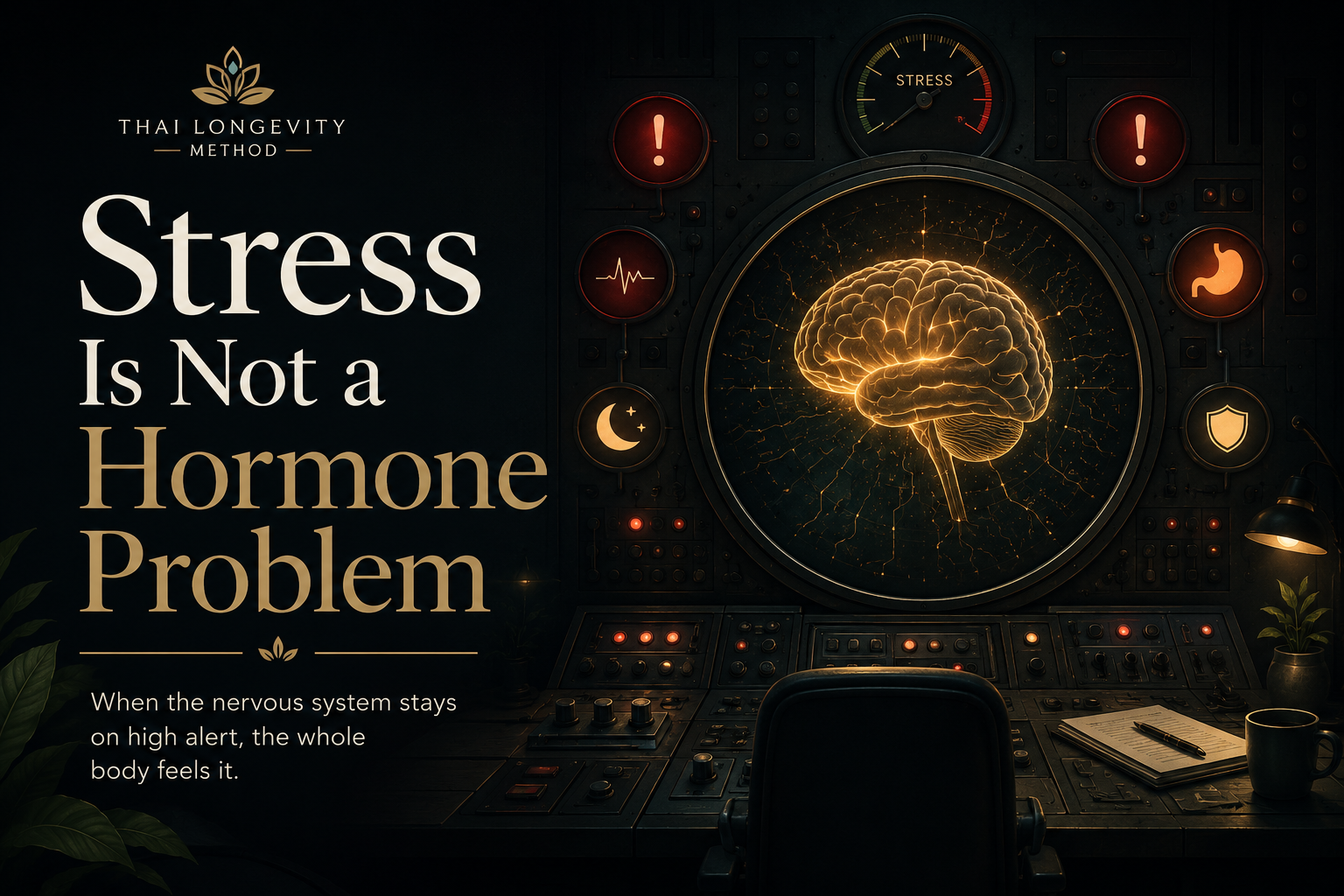
Burnout Is Not a Character Flaw

Why chronic workplace stress cannot always be overcome by trying harder—and why meaningful recovery may require more than rest.
Burnout is often narrated as a personal failure.
Perhaps you were not disciplined enough. Not resilient enough. Not organised enough. Perhaps everyone else is managing, and you simply need to become stronger.
This interpretation is not only unkind. It directs attention toward the person while ignoring the conditions under which that person has been trying to function.
The World Health Organization describes burnout as an occupational phenomenon resulting from chronic workplace stress that has not been successfully managed. It is associated with exhaustion, growing mental distance or cynicism toward work and reduced professional effectiveness.
Burnout is not classified as a medical condition, and the term refers specifically to the occupational context.
But one thing is clear:
It is not evidence of weak character.
## WHEN TRYING HARDER STOPS WORKING
Willpower can help us begin a difficult task, persist through a temporary challenge or meet an important deadline.
It cannot make unsustainable conditions sustainable.
When demands remain high while time, support, autonomy and recovery remain insufficient, asking someone to become more resilient may simply teach them to tolerate the situation for longer.
The problem is not always a lack of coping skills.
Sometimes there is too much work, too little control, inadequate recognition, conflicting expectations or no meaningful boundary between working and being available.
Trying harder inside the same unchanged system can deepen the exhaustion.
## AN ELEMENTAL WAY OF DESCRIBING THE EXPERIENCE
Within Thai Longevity Method, Water offers a language for replenishment.
Someone experiencing burnout may recognise the feeling of continually giving without receiving enough restoration in return. Water invites the question:
What has been leaving me faster than it can be restored?
Fire offers a language for effort, intensity and engagement.
When work once felt meaningful but now produces only exhaustion, detachment or resentment, Fire invites another question:
What has my effort been asked to sustain for too long?
These elements are not a biological explanation of burnout. Water is not a measurable reserve, and Fire is not a hormone, organ or energy-producing mechanism.
They are reflective lenses.
Their purpose is to help us describe an experience that may otherwise be reduced to "I should be coping better."
## RECOVERY IS NOT ONE MORE TASK TO PERFORM
Burnout recovery is often presented as another personal improvement programme.
Sleep better. Exercise more. Meditate. Manage your time. Become efficient enough to survive the workload that exhausted you.
Supportive personal practices can matter. Rest, movement, regular meals, time away from work and contact with people who feel safe may all help.
But recovery cannot always be created through self-care alone.
The conditions contributing to burnout may also need to change. That might involve reducing responsibilities, renegotiating expectations, taking appropriate leave, asking for support, changing working hours or addressing a workplace culture built around permanent urgency.
Sometimes the most important recovery practice is not adding something restorative.
It is removing or changing something that continues to cause harm.
## RECOVERY MAY NOT BE LINEAR
After prolonged stress, one quiet weekend may not restore enthusiasm, clarity or energy.
You may rest and still feel tired. You may have a better week followed by a difficult one. You may discover that slowing down allows feelings to surface that constant activity had kept at a distance.
This does not mean recovery is failing.
It means recovery is not a switch.
There is also no universal timetable. The duration and kind of support needed will depend on the person, the severity of the experience and whether the conditions that contributed to it have actually changed.
## KNOW WHEN TO SEEK HELP
Exhaustion, sleep disruption, difficulty concentrating and loss of motivation can have many causes. They may overlap with depression, anxiety, sleep disorders, hormonal changes, medication effects and physical health conditions.
Do not assume that every persistent difficulty is "just burnout."
Professional medical or psychological support is important when symptoms are severe, unfamiliar, worsening, interfering with daily life or continuing despite rest and changes in workload.
Seeking help is not an admission that you failed to manage stress correctly.
It is a way of taking your experience seriously.
## THE QUESTION BURNOUT ASKS
Burnout is not solved by proving that you can endure more.
It asks for a more honest examination of the relationship between what is demanded and what is available: time, energy, support, autonomy, meaning and recovery.
The question is not only:
How can I become strong enough to continue?
It is also:
What would need to change for continuing not to cost me myself?
Recovery begins when exhaustion is no longer treated as a verdict on your character, but as information deserving attention, support and meaningful change.
*This article offers general wellbeing information and is not a substitute for medical or psychological care.*
Further reading: [World Health Organization: Burn-out as an occupational phenomenon](https://www.who.int/standards/classifications/frequently-asked-questions/burn-out-an-occupational-phenomenon) · [CDC: Supporting worker mental health](https://www.cdc.gov/mental-health/caring/providing-support-for-workers-and-professionals.html)
Written by
Jean Lumi
Founder of the Thai Longevity Method, blending traditional Thai elemental medicine with modern nervous system science to help people live with greater calm, resilience and vitality.
About Jean LumiA practical guide to finding calm in a world that will not slow down.
Discover The Patience Reset